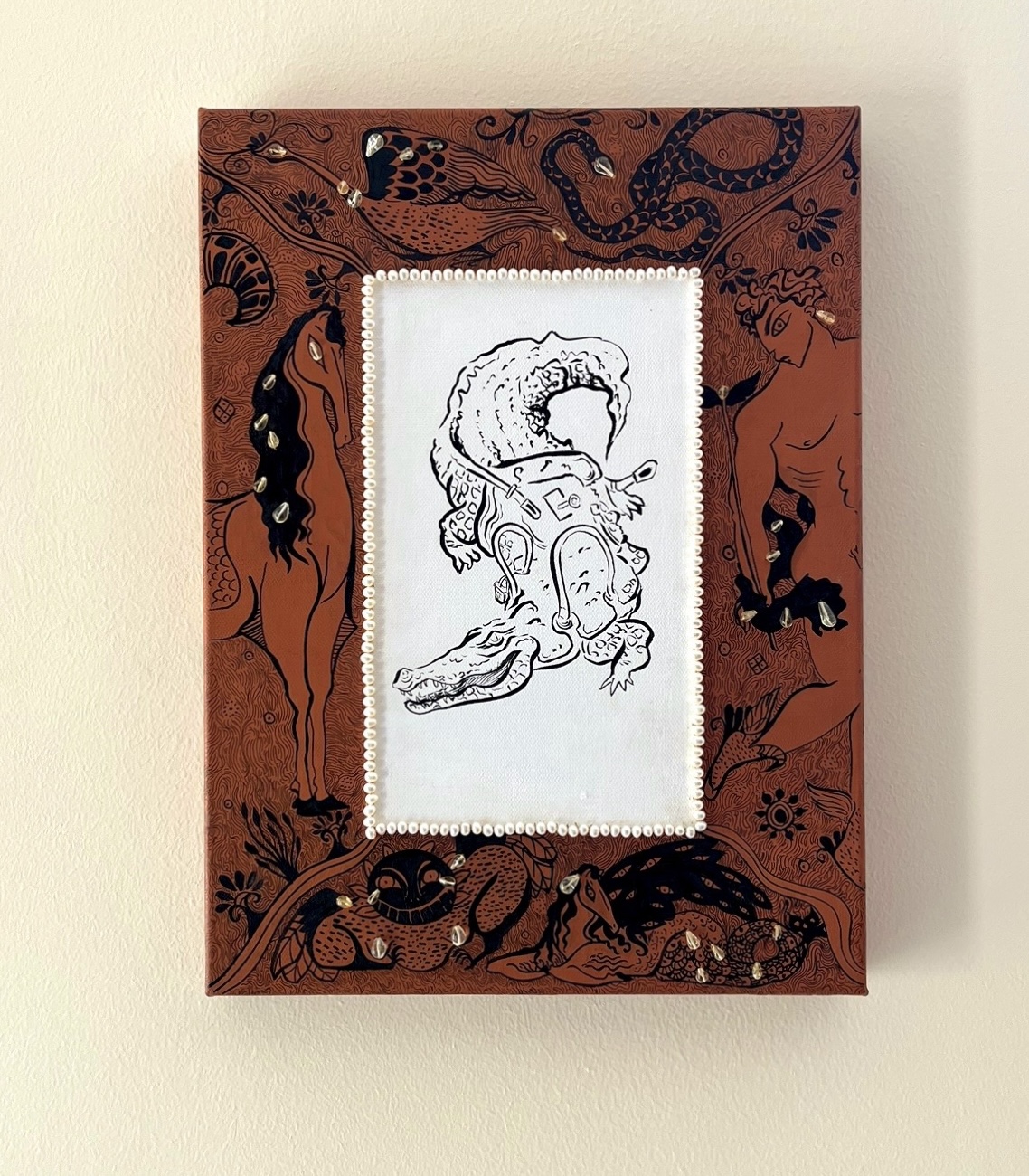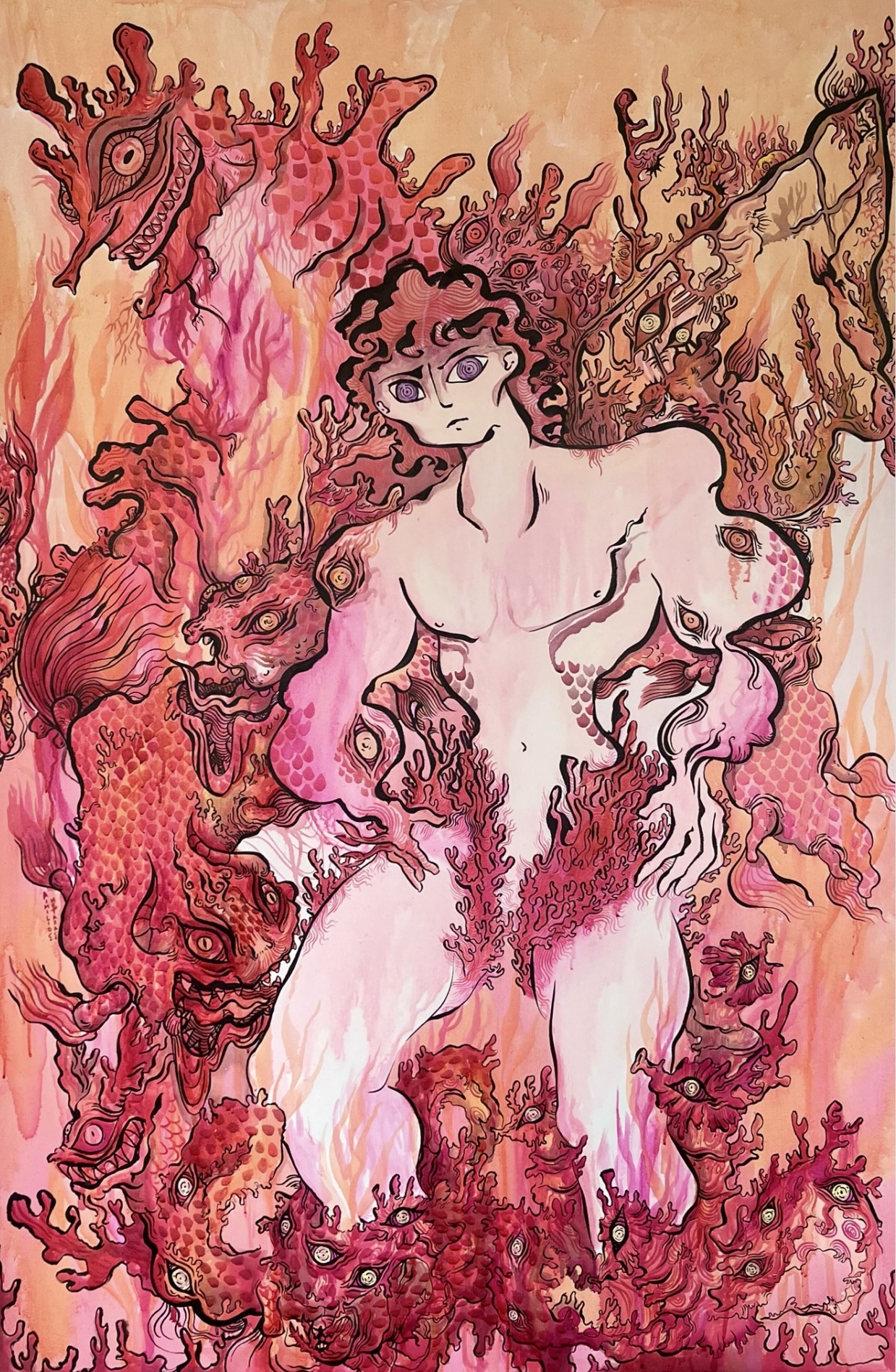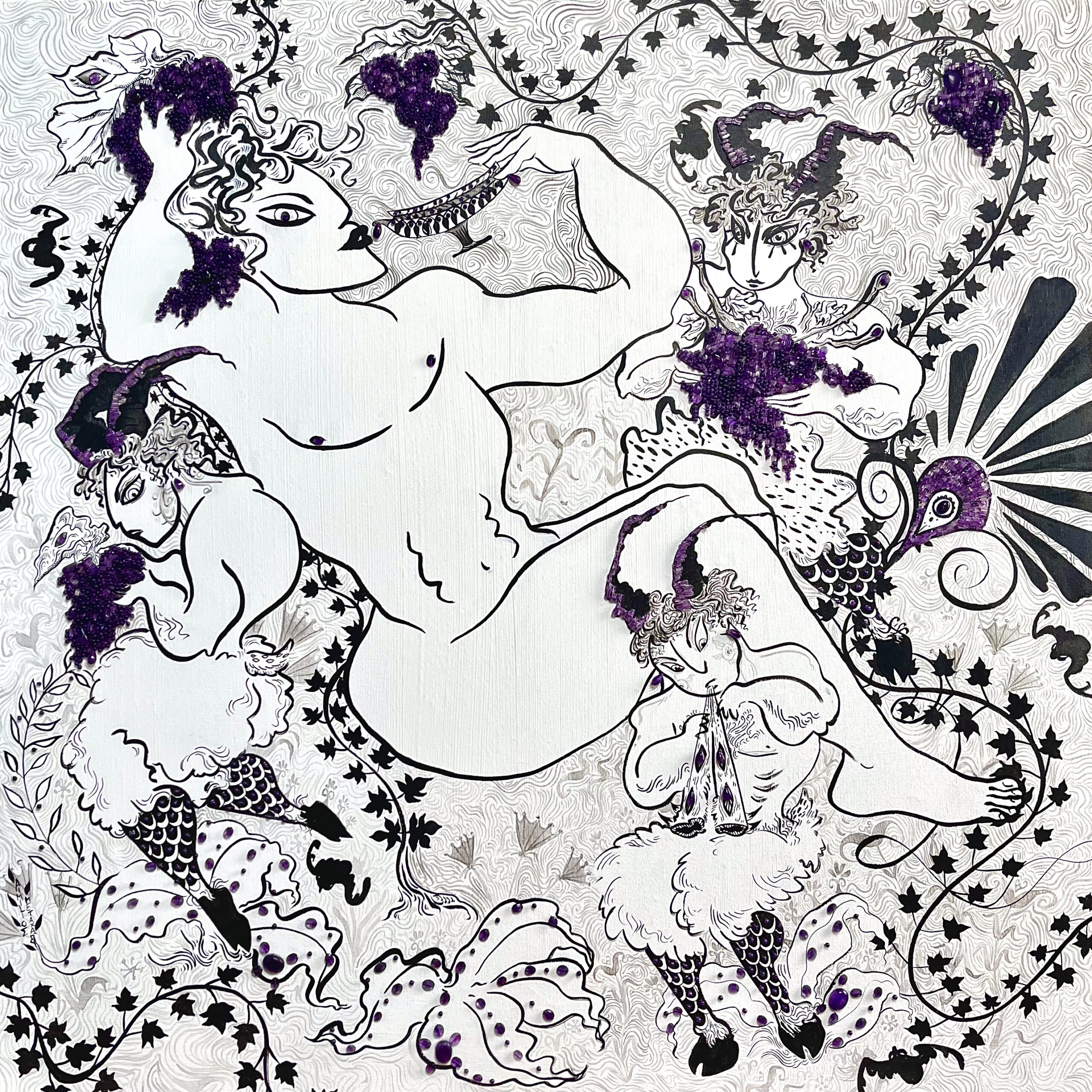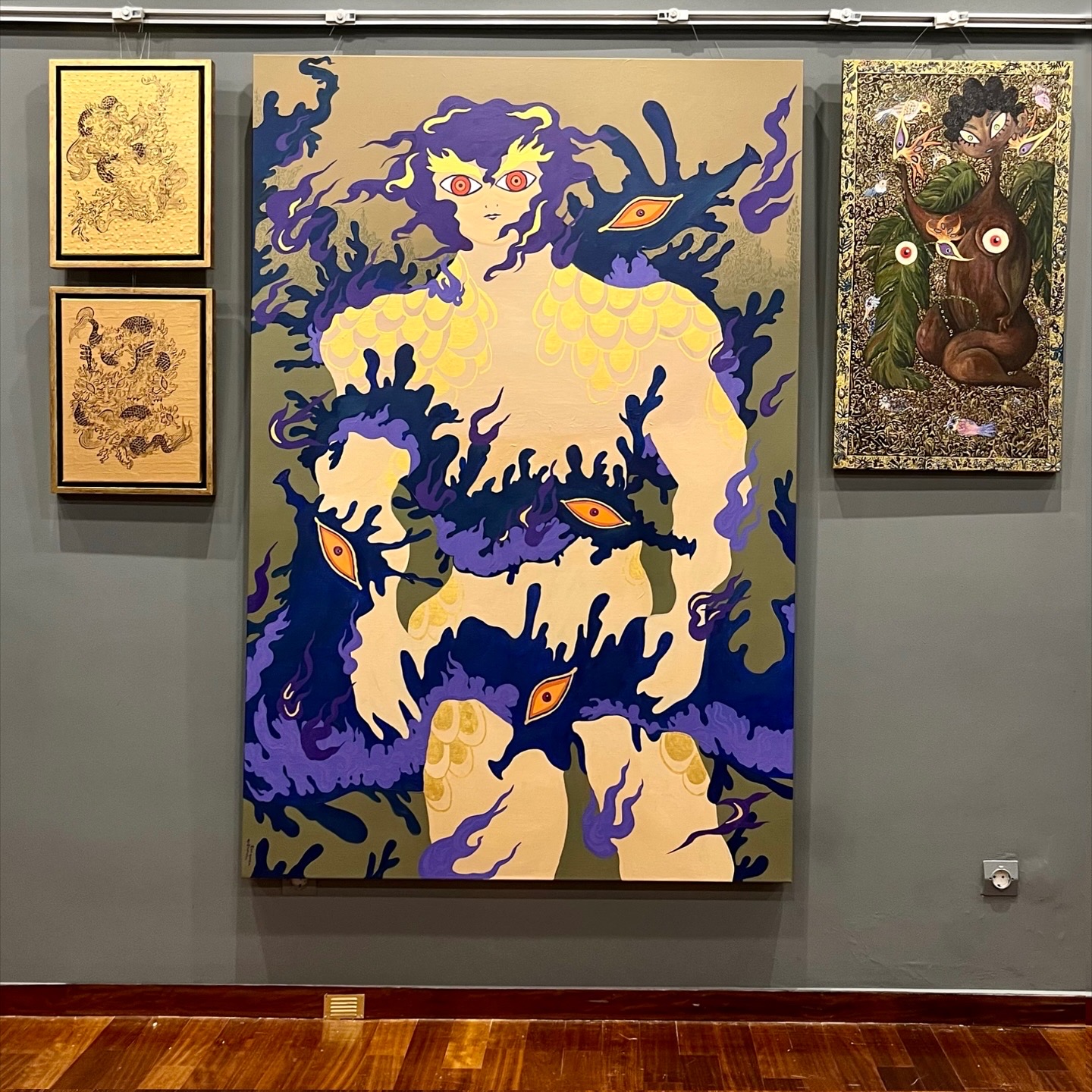
The originality of Aimilios Metaxas lies in his ability to continually surprise and captivate. As an emerging artist with exhibitions spanning continents, his growing global recognition is matched by a sense of anticipation around what he will create next. Metaxas is celebrated for his distinctive ability to merge tradition, mythology, and psychology in a way that resonates deeply with contemporary audiences—making his broad appeal no surprise. His oeuvre spans large-scale compositions to intimate, jewel- embroidered portrait-sized works, each a nod to his ancestral heritage.
Together, they offer a fresh perspective on what painting can be—both
materially and conceptually.
Born in 1999 and raised in Athens before relocating to London, Aimilios Metaxas draws from a rich multicultural background that is deeply embedded in his practice. His work channels the ornamental traditions of Greek and Asian art, reinterpreting them through a contemporary lens focused on storytelling, symbolism, and materiality. Using semi-precious stones, silk embroidery, and mythic, figurative forms, Metaxas creates compositions that are both visually opulent and psychologically resonant.
In 2023, following his graduation from the Royal College of Art’s MA Painting program, he held his debut solo exhibition and salon in London, curated by a former Christie’s art specialist. The exhibition was a success, with one of the featured works now held in the gallery’s permanent collection.
Metaxas has been widely praised for his ability to fuse the visual language of ancient art with the innocence of childhood and the introspective lens of psychology. His paintings read like visual poems, inviting viewers to journey back to a time when art shaped everyday life and framed the way people understood the world. Deeply influenced by artisans such as Fabergé, Metaxas envisions his work as more than objects to be hung— they are lived experiences, imbued with meaning, memory, and tactile presence. This vision fuels his integration of jewellery-making techniques, gemstones, and three-dimensional elements, blurring the line between painting and precious artefact. It is no surprise that his work has been likened to treasures—an assessment shared by the renowned Ilias
Lalaounis Jewelry Museum in Athens, which invited him to exhibit in a group show in 2024.
There is a romantic undercurrent in Metaxas’s practice—evident in a body of work where flora and fauna delicately encircle his ornate frames. These elements, inspired by mythology and the British countryside, evoke the Regency era of British aristocracy and the opulence of the Russian imperial court—periods where fantasy and childhood imagination offered an escape from the cruelties of reality.
While his work carries a sense of solemnity—at times appearing to mourn the erosion of ancient splendour and its transformation under contemporary aesthetics—it resists despair. His deities and mythical creatures are rendered with an unexpected softness, even charm. His Hypnos, with a piercing gaze, unsettles the viewer; while his crocodile, adorned and endearing, borders on the whimsical.
Rather than dwelling in catastrophe or critique, Metaxas leans into beauty and hope. His work, though rooted in myth and psychological inquiry, ultimately offers a vision that is tender, generous, and disarmingly sincere.